
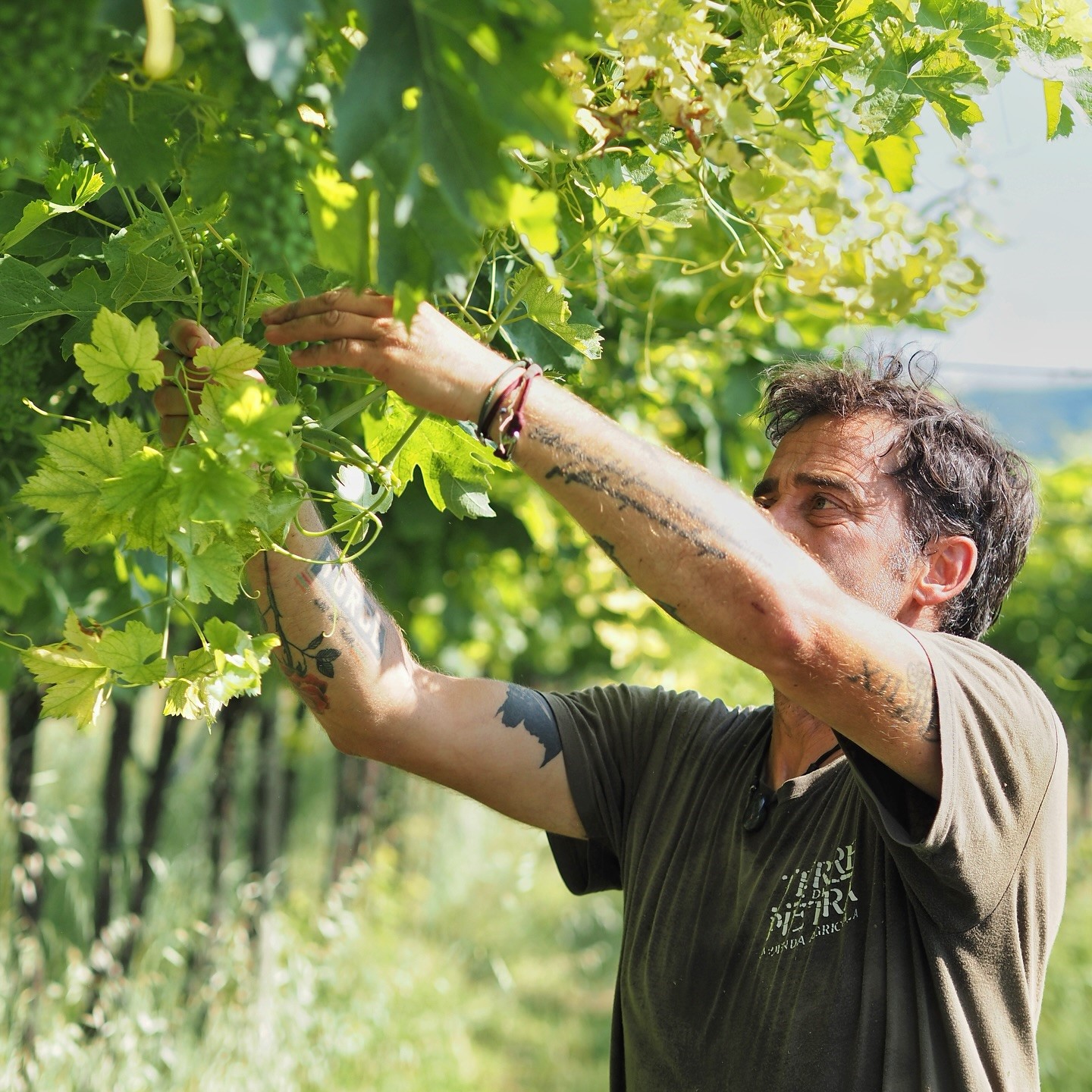
We resume our “Wine Talks” with the producers, and this month we’re exploring the Terre di Pietra winery in Marcellise. The Terre di Pietra project was born from the dream of Laura, who, alongside her husband Cristiano, began producing wine in a small garage in Torbe, a hamlet of Negrar di Valpolicella, in 2007. In 2011, the winery moved to Marcellise, and that same year they began producing natural wines. In 2017, Laura tragically passed away, and Cristiano courageously took up her dream and made it his own. In just a few years, together with his daughters Anna and Alice, and the many people he met along the way, he was able to create a unique reality in Valpolicella, a blend of different lives that, through sharing, have become a true extended family.
On a warm Monday morning in August, we visited Cristiano, who welcomed us with a refreshing glass of kombucha, naturally produced in their fermentation laboratory. In this case, wine was not the protagonist, the text of the meeting, but rather the con-text, or pre-text, for reflecting on some of the values of Terre di Pietra, which has evidently become much more than a winery: refuge, home, family.
Cristiano, I’d like to share some of my impressions of when I first came here, which have been confirmed on subsequent visits. The first word I’d like to suggest is COMMUNITY, which I believe is a key value in your identity.
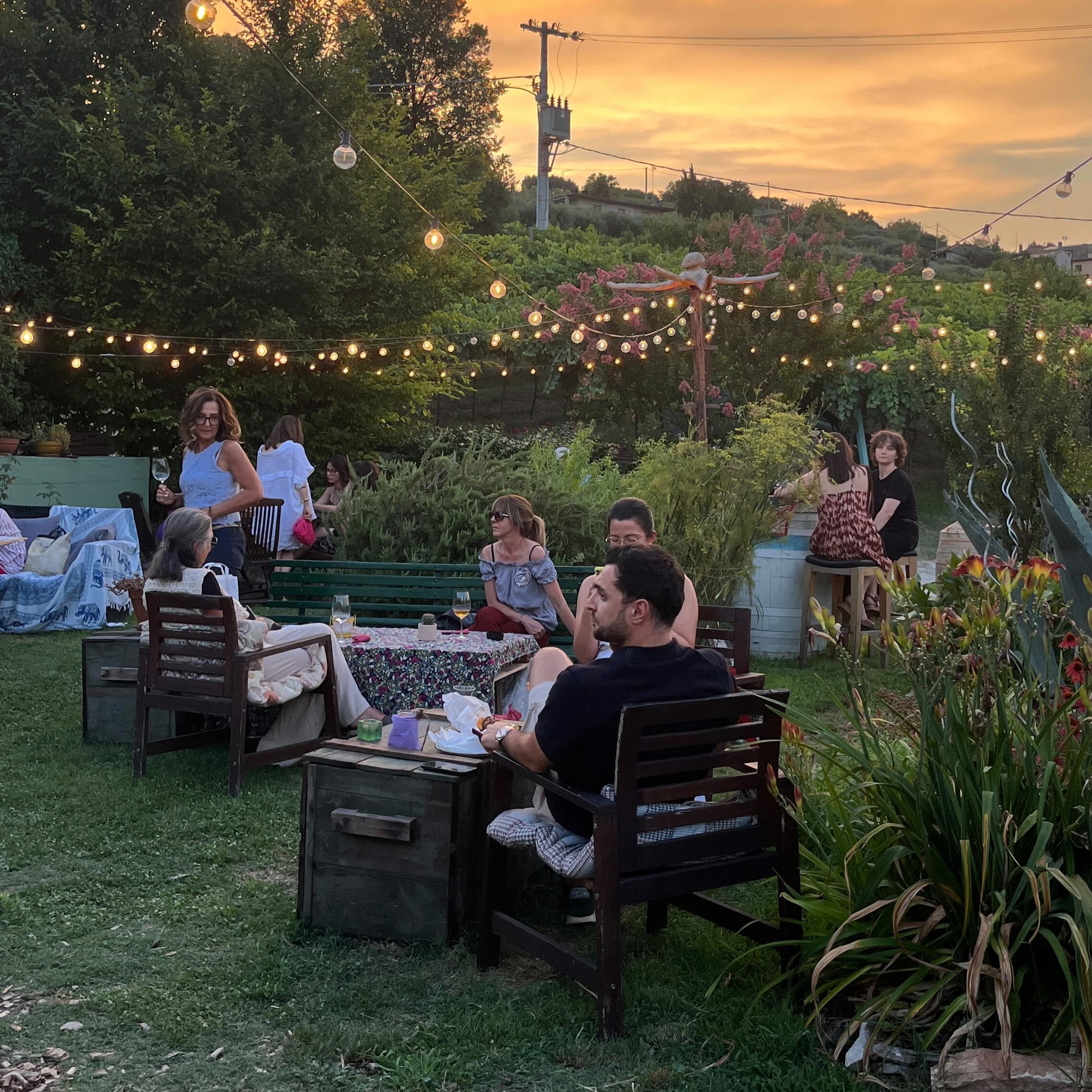
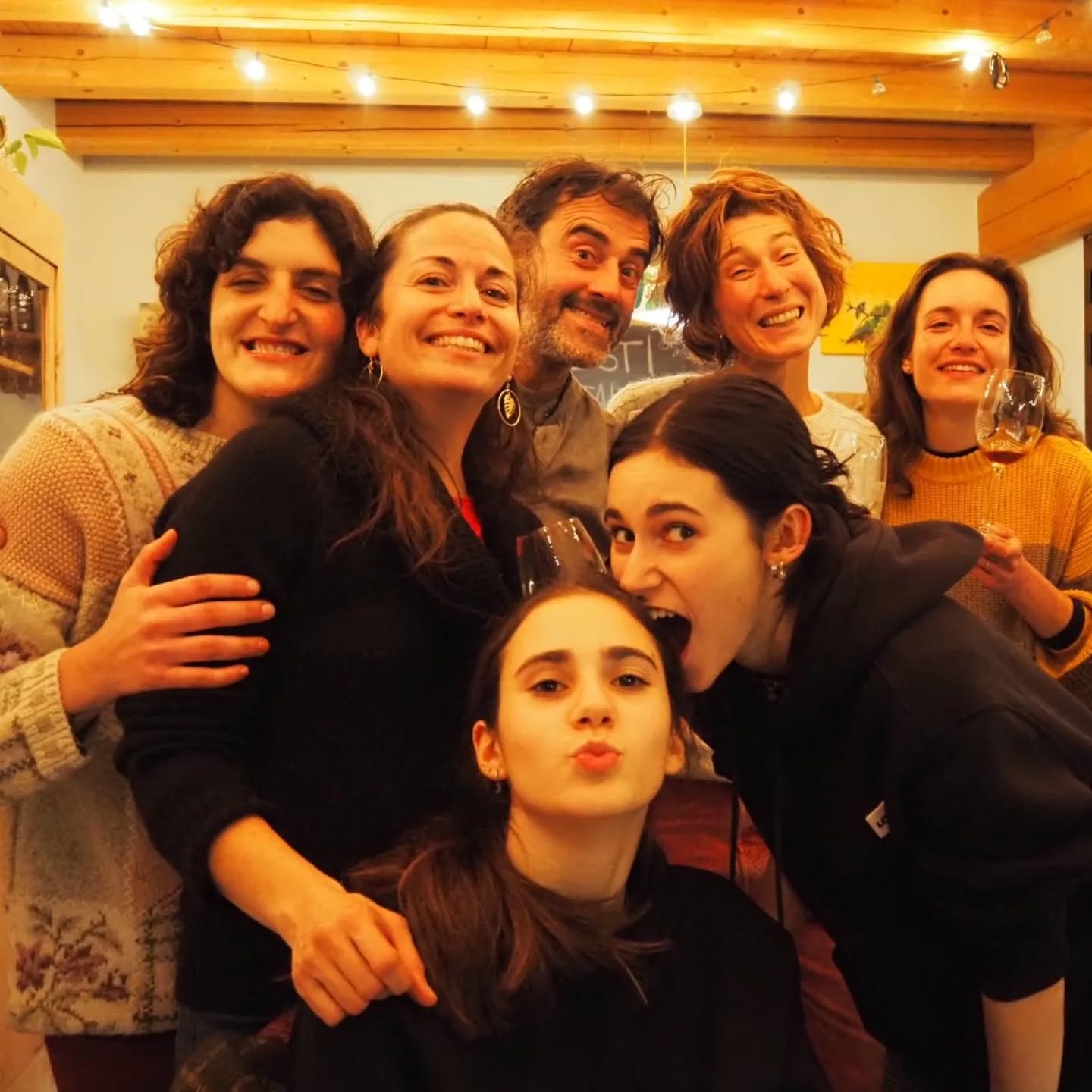
- Yes, because it’s not something that’s typically done in the wine world, which is generally a bit elitist. Those who make wine normally think they’re very high up, but for us it’s different because our life paths have been different: having also to think about how to rebuild a family makes you see things differently. The community was created and is being created because we’ve experienced a period of isolation in the past, when we needed to heal wounds and sort out many of the things we were facing, and then a moment came when we wanted to have people close to us again. At this point, the right people arrived, who shared a good part of the journey with us, also knowing where we were starting from, and that’s neither a given nor an easy thing to do. All the people who came and stayed, or even who came and then changed paths, were never our employees, even though it’s clear they have a paycheck, but they entered a particular context and were willing to do things that aren’t the norm in an employment relationship. They’d give me a hand in the vineyard in the morning, and then maybe help my little daughter with her homework in the afternoon. My daughters needed a female role model, and they found it in the girls here. That’s why this community was created, which is also a bit of an extended family. And it’s something that’s also cultivated thanks to the activities we do here (the crochet course, the aperitifs, the homemade bread, etc.), which keeps the sense of community alive. There have been people who came for a course and then realized they were happy here and stayed. Even though we each live in our own homes, we have a strong community life, we spend a lot of time together. They all came from different situations and backgrounds, often in difficult times, and here they found a place to heal both physically and mentally. When you find yourself sharing difficulties, it also becomes easier to overcome them. Everyone had their own path and found their place, their dimension here. Every Friday afternoon we hold a farmers’ market here, and this also creates community, because these are people who share the same vision of agriculture and have found a space here that they otherwise wouldn’t have had. Many of these producers are small businesses that don’t have a retail outlet, or perhaps they do, but they’re far from the city, and this gives them an opportunity to be more easily accessible. So thanks to this, our community has grown, because those who attend the market also return for the other activities we do here at the winery.
In fact, it was clear to me right away that the human factor comes first here, and that’s not at all a given in other places.
- Here we work according to the permaculture ethic, whose pillars are: ethic for the land, ethic for the future, and ethic for people. This is something we cultivate a lot, having established this mechanism whereby every two or three weeks we all meet to talk, not only about work but also about life’s difficulties, problems, and many other things. We share everything because sharing makes everything a little easier and creates a strong bond. Permaculture is helping us a lot in this respect, because we make natural wines and work with a certain agricultural ethic: it would be a bit of a contradiction if we then treated people like employees, or even worse. This very special relationship has also been created from an economic standpoint, because the company is small and the guys here know that I can’t go above a certain amount; we can’t afford it, so everyone here has decided to give up something in order to carry on a project together. These are things not all of us consider, but when you find people who share your ideals, it becomes easier to understand each other, and that’s why decisions here are made together. It’s true that I’m legally responsible, but if something needs to be done, I don’t decide: we gather together, we talk about it, we discuss it, and that’s how projects begin. And the projects here are wonderful because, thanks to connections and friendships, we manage to salvage so many materials and give them new life; everything you see here is made with recycled materials. All of this contributes to creating this sense of community. For example, the oven isn’t just the Terre di Pietra oven, it’s the wood-fired oven we built together. In short, we have a list of jobs and projects that we’ll probably never realize, but it’s also nice to dream every now and then.
It’s not easy to find these situations, especially in Valpolicella, which has now become a business land; money comes first, and the human aspect often gets sidelined. Luckily, there are oases where this aspect is still strongly considered, and if you’re lucky enough to enter one of these oases, you realize you’re doing just fine. We joke around every now and then, even tease ourselves a little about the fact that we’re probably the only winery in Valpolicella that will never make money, but when you think about it, what are we missing? Nothing: we have our vegetable garden, we produce almost everything we need, we host the Friday market, we have a wonderful extended family atmosphere, so we often get together outside of work—in short, we’re doing just fine.
I think this is particularly evident in a society like ours, which tends to isolate people rather than bring them together.
- Of course. You know, that sense of community helps. This year has been a tough one for the wine world, and obviously we’ve been affected too, but no one has backed down. We’ve met several times to talk about it, and each time someone has an idea or a new proposal. For example, this year we started offering aperitifs in the garden. It seemed like a small thing, but instead it went off like a bomb, and it’s helping us a lot, even financially. It’s also been another way to bond and strengthen our relationship. My feeling is that everyone here cares about the project and tries to find a solution together, even in difficult times.
Another reflection I’d like to share with you is about FREEDOM. Freedom because you go your own way despite everything. We may have already touched on something when we talked about community, but the fact that you have left the Valpolicella Denomination, or that you produce natural wines, has undoubtedly raised a lot of criticism.
- Absolutely. Some of the criticisms are frankly valid, in the sense that unfortunately, some people still see natural wine as something made without any criteria; it just happens what it does. There’s a difference between making natural wine by taking care of things and taking the time to do it well, and doing it by justifying every flaw by saying “it’s natural.” That’s an excuse that no longer holds up. We all know by now how to make a good wine, even if it’s natural: it takes a lot of time, a lot of energy, a lot of passion, and a lot of neatness. So some criticisms are well-founded, while others are sterile. In fact, making natural wine is a concept of freedom, if it frees you to make a choice you believe in. This choice doesn’t have to be shared by everyone, and nowhere is it written that everyone has to like natural wine. It frees you because you’re no longer in a mechanism that pulls everyone in the same direction. When we started out, we produced “conventional” wine, although we tried not to intervene too heavily from an oenological standpoint. In 2011, however, the turning point came when we began producing natural wines, further enhancing the path Laura had already embarked on. In the early years, we made Valpolicella DOC, but then the denomination itself distanced itself from the territory, changing its regulations. From my point of view, this was a somewhat foolish decision in terms of protecting the territory; it was primarily a commercial choice. It’s not mandatory to share and embrace these choices, in fact, I distanced myself from them. Consider that in 2018, I was coming off a difficult year (Laura passed away in 2017), I had problems with the DOC because the wine was lacking in color (but using native grapes is normal; they don’t produce much color), in short, I felt like I had nothing to lose, and I decided to leave the Denomination. After all, we make exactly the same wines as before, but we can’t call them Valpolicella. So even leaving the Denomination has ultimately given us more freedom, we can make wines even with little color, without worrying about market demands: we have a small production, we believe in what we do and we are not afraid to go our own way.
However, I imagine that from a commercial and sales point of view this choice did not help you…
- But do you know what? Paradoxically, certain things actually helped me. Because at natural wine fairs, knowing we came from Valpolicella, many didn’t even want to taste our wines, because there was the idea that Valpolicella wines were colorful, structured, powerful, soft, alcoholic, etc. And these characteristics are good for a large segment of the market, especially abroad, but not for the world of natural wines. Those who make natural wine are very informed, and they know that using Corvina, Corvinone, and Rondinella grapes gives you no color, no power, no structure, no body, because they are light grapes. So they didn’t taste them because they thought it was that Valpolicella. But by removing the Denomination, we were able to have our wines tasted without prejudice, revealing that there is also another Valpolicella beyond the one that sells in large quantities. So this fact allowed us to do better in some markets, while obviously I lost some customers, but you certainly can’t chase after everyone.
The concept of freedom here is closely tied to people: I’m lucky to have this community, but it’s something that stands strong because everyone is free to do what they feel like. Everyone knows they can take time off; no one emails me asking for vacation; they simply let me know they can’t because they have other commitments, and somehow we make arrangements. This way, everyone has the opportunity to have other experiences and pursue other projects. Those who are here have given up something financially (we’ve all made this choice), but at the same time, they know that if they want to take five days off to have an experience elsewhere, they can do so without a problem.
In the end, I’d like to share a thought I had when we first met here, one I’ve become increasingly convinced of ever since. I immediately sensed that this place has a FEMININE SOUL. It was a feeling I had, and one that recurred with subsequent visits.
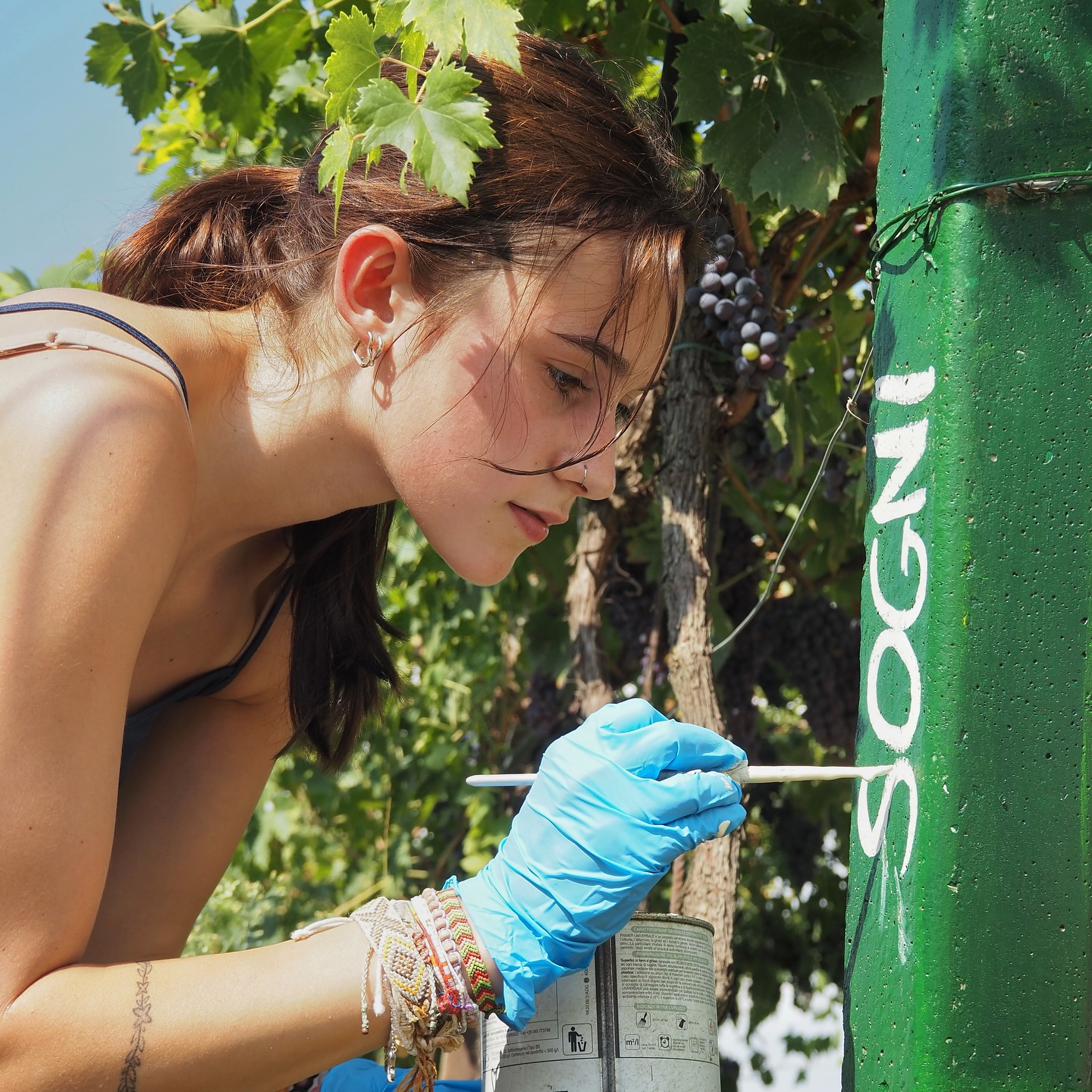
- There are eight women working at Terre di Pietra. There was a moment when I, too, wondered why this was the case, because it’s not that I specifically sought out women to work here, but they just showed up. Plus, I have two daughters, who are already partially involved in the project, and one day it will be completely in their hands. I’ve thought about this, and perhaps it’s a very banal point: Terre di Pietra was born as a woman, and there will always be a dominant female element in all our activities. Laura was an energetic and very strong woman, and equally energetic and strong women have arrived here. So it’s like a common thread that carries forward a project that was born as a woman and continues to be so.
In fact, what I felt was a sensation of protection and care, which seemed very maternal to me.
- There’s a strong maternal feeling. Partly because some of the girls have been here for a while; they met my daughters when they were experiencing great difficulty. So the maternal aspect is definitely there because they’ve seen two girls grow up, and supported them. It should also be added that not all of them had a good experience with motherhood, and perhaps here they’ve found a way to bridge this gap that they weren’t fortunate enough to address otherwise. So it’s a feeling that many have told us they’ve sensed.
On the other hand, it’s sometimes difficult for the men who arrive; not everyone is predisposed. I’m very comfortable here and have never had any reservations. I had Laura as a wife, so I’ve never had the idea that a woman can’t do what a man does and do it even better than many men. So for me, it’s normal to have women working with me, but when other young men arrive, it’s not always easy, and it’s happened that some have left.
I keep thinking that if it weren’t for this feminine energy, this place wouldn’t have become what it is, and since I think it’s becoming something very beautiful, that’s fine.
If you’re curious to learn more about Terre di Pietra, a unique winery in Valpolicella, you can join one of our “Soave and Amarone” group tours, or we could organize a customized private tour for you (contact us at [email protected]!). You can also find some of their most iconic wines in our online shop.