

Valpolicella
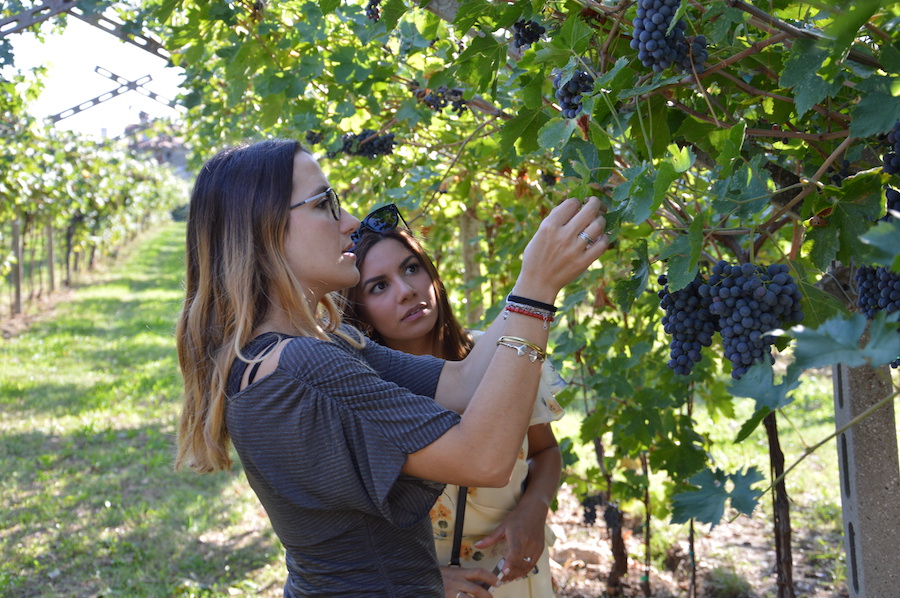
Valpolicella is the most ancient area of wine production in Italy, and one of the most important ones, too. Here, wine continues to be created by blending ancient wisdom and modern techniques, using autochthonous vines such as Corvina (purple, thick-skinned grapes with light tannins, hints of cherry and plum), Corvinone (dark blue, large grapes in a pyramid-shaped bunch, used as a reinforcement of Corvina, with light tannins and a complex aromatic spectrum), Rondinella (as dark as the feathers of a swallow, “rondine”, it’s probably the most widespread vine in Valpolicella), Oseleta (thick-skinned grapes with good tannins, grouped in small bunches that look like small birds, whence its name from the dialectal term for “bird”) and Molinara (light coloured, with a very waxy dust, so much that the grapes seem almost coated in flour coming from a mill — in dialect, “molino”).
This great variety of vines grows in different parcels on diverse altitudes throughout the valleys: when blended together, they give life to wines with unique and fascinating variations of aromas and flavours.
“Dry, red and cordial, like the home of a brother one gets on with” — these are the words Ernest Hemingway used to describe a glass of Valpolicella, a wine he famously loved. This area is the birthplace of Valpolicella DOC (= controlled designation of origin), Valpolicella Superiore DOC, Valpolicella Ripasso DOC, Amarone della Valpolicella DOCG (= controlled and guaranteed designation of origin) and Recioto della Valpolicella DOCG; the label “Classico” can be added to those wines produced inside the ancient traditional areas, comprising the five original communities of Sant’Ambrogio, Fumane, San Pietro in Cariano, Marano and Negrar.
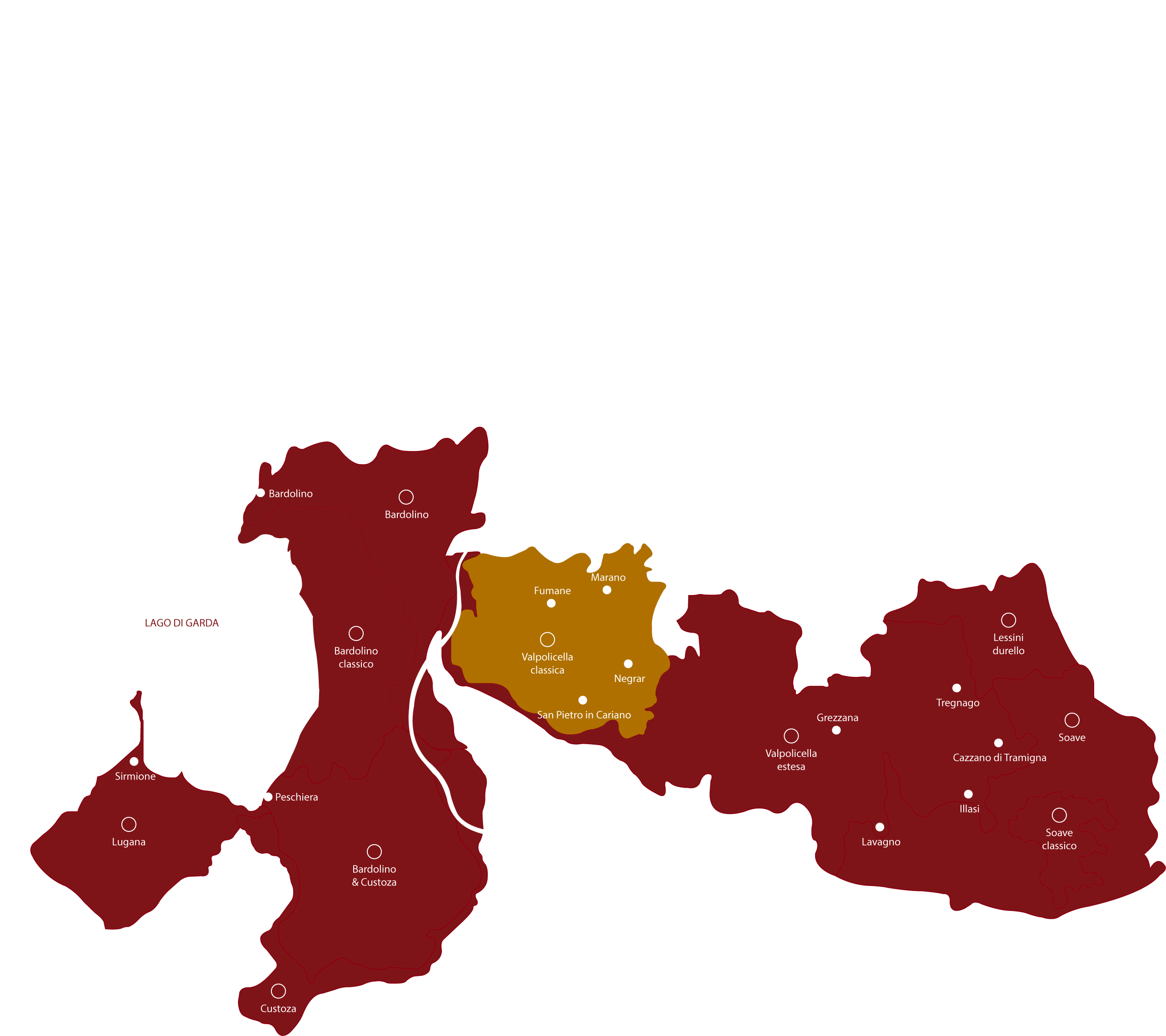

The whole area of production is of 8.398 hectars and it includes not only the 5 municipalities of Valpolicella Classica but also the zone of Valpantena – east of Valpolicella Classica- close to Verona city center and the DOC Region with Valle di Mezzane, Val d’Illasi and Valle di Cazzano di Tramigna.
While Valpolicella DOC and Valpolicella Superiore DOC are produced using fresh grapes, our other wines rise out of an ancient Mediterranean winemaking tradition: making wine using raisined grapes, an ingenious way to create a stronger wine and to get more complex and intense flavours. This tecnique is called “Appassimento”.
The grapes selected for Recioto — a sweet red wine, considered the ancestor of the Amarone — usually come from vineyards with a southwestern exposure, where they are able to develop a higher sugar content, while those selected for Amarone — probably the best known wine of this area — come from parcels with an eastern exposure, where the grapes are allowed to ripe slowly, in order to get the perfect balance necessary for the finest of wines.
Valpolicella with its sinuous hills, breath-taking views, and green vineyards, is a land of wineries, olive groves, and of history. If you are looking for ancient monuments and architecture, you are spoiled for choice. Among the many sites that can be visited in the Classic Zone we mention the roman temple of Minerva, the Church of San Giorgio, one of the most ancient places of worship of the territory, that is still in use and the beautiful Renaissance venues.
Every step of the way, you will get to know more and more about our beautiful land: our guides can’t wait to introduce you to all of its beauties and tastes! Just book one of our wine tasting tours and be prepared to feast your eyes on the scenery and to amaze your senses with our amazing Valpolicella wines!
Our Gallery Gallery
FAQ
How can I reach Valpolicella from Verona?
Valpolicella is located about 20 kilometers from Verona, and we offer several options to make the journey part of the experience:
Tours departing from Verona: the easiest solution, our group and private tours depart from our office in Via della Valverde 75 (37122, Verona) and include transport in an air-conditioned minivan.
Private transfers: we can arrange a pick-up directly from your hotel.
On your own: It is possible to reach Valpolicella by car (about 20 minutes from Verona), but to visit wineries, joining an organized tour is strongly recommended to avoid driving and parking issues.
Which are the best experiences for tasting Amarone in Veneto?
For those wishing to discover the soul of the “King of Valpolicella,” we propose itineraries that celebrate its history and flavor:
The Amarone Country (Full Day): A 7-hour total immersion in Valpolicella Classica. You will visit two different wineries, where you will taste the entire range of DOC and DOCG wines from Valpolicella. You can also taste traditional dishes of Verona in an enoteca, or in a typical local osteria. https://www.paguswinetours.com/group-wine-tours/the-amarone-country/
A Taste of Amarone (Half Day): Ideal for those with limited time. Includes a visit to a selected winery and a panoramic stop in the beautiful village of San Giorgio di Valpolicella. https://www.paguswinetours.com/group-wine-tours/a-taste-of-amarone/
Two Amarone Wineries (Half Day): along the wine route, you will visit two different wineries. Here you can taste the entire range of DOC and DOCG wines, such as Valpolicella, Ripasso, Amarone and Recioto, with their different styles. https://www.paguswinetours.com/group-wine-tours/two-amarone-wineries/
A Sunday of Amarone (Half Day): approximately 3 ½ hours, live an authentic tasting experience in a winery of Valpolicella with this Sunday tour. Admire the beautiful hills and landscape of San Giorgio in Valpolicella and discover the local wines (Amarone included!). https://www.paguswinetours.com/group-wine-tours/a-sunday-of-amarone/
Espresso & Amarone (Half Day): approximately 4 ½ hours, join this coffee & wine tour for an experience full of authentic taste and flavours. The first stop of the tour will be the “Caffè Roen roasting shop” and then the tour continues in a local winery in Valpolicella. https://www.paguswinetours.com/group-wine-tours/espresso-and-amarone/
Sirmione by boat, Lake Garda and Amarone (Full Day): approximately 6 hours, join us for a relaxing boat ride on Lake Garda, exploring the enchanting historic center of Sirmione from both land and water. After the tour of Sirmione are also included the visit, light lunch and a wine tasting in an Amarone’s winery. https://www.paguswinetours.com/group-wine-tours/sirmione-by-boat-lake-garda-and-amarone-half-day-tour/
Soave and Amarone (Half Day): approximately 4 ½ hours, join us for a half-day tour and discover the most important white and red wines of Verona. You have the possibility to taste white wines in a winery in Soave and red wines in a winery in Valpolicella. https://www.paguswinetours.com/group-wine-tours/soave-and-amarone/
Private tours:
Three Amarone wineries (Full Day): 7 h approximately, you will discover the gorgeous land of red wine, Valpolicella, and its traditional products. You can visit three different wineries of Amarone and there is also the light lunch in one of these. https://www.paguswinetours.com/private-wine-tasting/three-amarone-wineries/
Lake Garda and Amarone (Full Day): 8 h approximately, the “Lake Garda and Amarone” tour offers the possibility to visit the most prestigious areas of Verona: Lake Garda and Valpolicella, on the same day. You can walk through the streets of Bardolino or Lazise and visit a cellar where you can taste traditional wines such as Bardolino DOC or Rosè Bardolino Chiaretto DOC. You will have lunch in a local restaurant at the lake and then you will move to a winery of Valpolicella Classica. https://www.paguswinetours.com/private-wine-tasting/lake-garda-and-amarone/
In the lands of Amarone (Full Day): 7 h approximately, during this tour, you will stop at two different wineries. There, you will discover the entire range of their DOC and DOCG wines, such as Valpolicella, Ripasso, Amarone and Recioto with their different styles. For lunch, you have the possibility to go to a local enoteca or in a typical osteria to enjoy our traditional cuisine. https://www.paguswinetours.com/private-wine-tasting/in-the-lands-of-amarone/
What does the term "Classico" mean on Valpolicella wine labels?
If a bottle of Valpolicella DOC features the term “Classico” on the label, it means that the wine was produced in the oldest and most traditional area of Valpolicella.
How many and which are the historic municipalities of Valpolicella Classica?
There are five historic municipalities in the Valpolicella DOC area: Negrar di Valpolicella, Marano di Valpolicella, Fumane, Sant’Ambrogio di Valpolicella, and San Pietro in Cariano.
Which are the typical grape varieties and wines of Valpolicella DOC?
Valpolicella DOC is mainly known for its red wines. The most important ones include Valpolicella DOC, Valpolicella Superiore DOC, Valpolicella Ripasso DOC, Recioto della Valpolicella DOCG, Amarone DOCG, as well as many other Veronese IGT wines that vary depending on the winery. As for grape varieties, the main ones found in Valpolicella are Corvina Veronese, Corvinone, Rondinella, Molinara, and Oseleta.
Is wine tasting the only activity in Valpolicella?
Absolutely not! Valpolicella offers much more than wine, including beautiful panoramic landscapes, olive oil tastings and opportunities for history and art lovers to admire monuments and ancient architecture. Among the many historical and cultural points of interest are the Church of San Giorgio and numerous Renaissance villas.
Are there events or festivals throughout the year?
Yes, a variety of events take place all year round, many of them connected to wine and local traditions. Among the most important are the Festa dei Vini Classici della Valpolicella, which offers tastings and cultural activities, and the Palio del Vino e dei Sapori, typical of the harvest season, which takes place in Negrar di Valpolicella (one of the five historic municipalities of the region).
Is Valpolicella accessible to everyone?
Yes but with some considerations. As the area is mainly hilly, some historic villages and nature trails may have uneven slopes. However, many modern wineries are becoming fully accessible and free of architectural barriers.
What is the best time to visit Valpolicella?
The best time to visit Valpolicella is during the shoulder season, such as autumn, where you can witness the grape harvest, and spring which offers an ideal climate for tours, cycling excursions and outdoor walks while enjoying the blooming landscapes.
How many days are needed to visit Valpolicella?
The length of a visit to Valpolicella depends on a person’s interests: if you wish to taste the area’s typical wines and some exclusive Veronese IGT wines, one day is enough. In addition to wine, if you also want to explore the historical, artistic, and natural aspects of Valpolicella, at least 2–3 days are recommended.